21
03, 2014
Dissecting the difficulties of writing a sequel
A writer’s mind can be a dangerous thing. Perhaps the most notorious forms of self-sabotage are writer’s block and a related syndrome: the sophomore slump.
A writer’s mind can be a dangerous thing. Perhaps the most notorious forms of self-sabotage are writer’s block and a related syndrome: the sophomore slump.
An unfortunate truth about experiments: they often end in failure.
Here’s the good news: self-publishing puts authors in control of nearly every aspect of the publishing process. That’s also the bad news.

Titles represent anywhere from a few hundred to hundreds of thousands of words. They have to be worthy of all that hard work you put into your short story, novella or novel. And they must be marketable.
When one first decides to become a novelist, many important questions come to mind: What kind of stories should I write? Should I use my real name or invent something better? Can I pull off the pipe and beard look?
Whenever I imagine my future novels sitting on a bookshelf, I see my full name on the spine. Mine and mine alone.
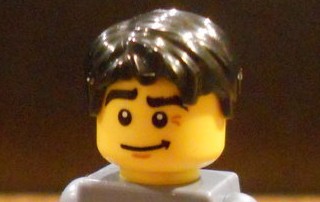
Some of the characters I’ve enjoyed writing about the most are an inch and a half tall.
At a recent Allied Authors of Wisconsin meeting, I was thrilled to receive unanimously positive feedback on a particular character in the chapter I read. The only problem is all that praise went to a pretty minor character who appears in just one scene in the entire novel and doesn’t even have a name.

Close your eyes and imagine a writer. What do you see? A free-spirited young woman writing in a leather-bound journal beneath a tree?
If the first draft allows the writer to indulge in a carefree orgy of imagination, a Wild West of whimsy, and a devil-may-care series of experiments, then the editing process demands the writer to abstain, rein it in, and exorcise a host of demons.